
Milkwood trees on the South Coast: what the law says.
Last checked
The short answer
Not without a licence. White milkwood and coastal red milkwood are protected trees under the National Forests Act. No one may cut, damage or remove one, on private land or anywhere else, without a licence from the Department of Forestry, Fisheries and the Environment (DFFE). Light pruning in town gardens is the main exception.
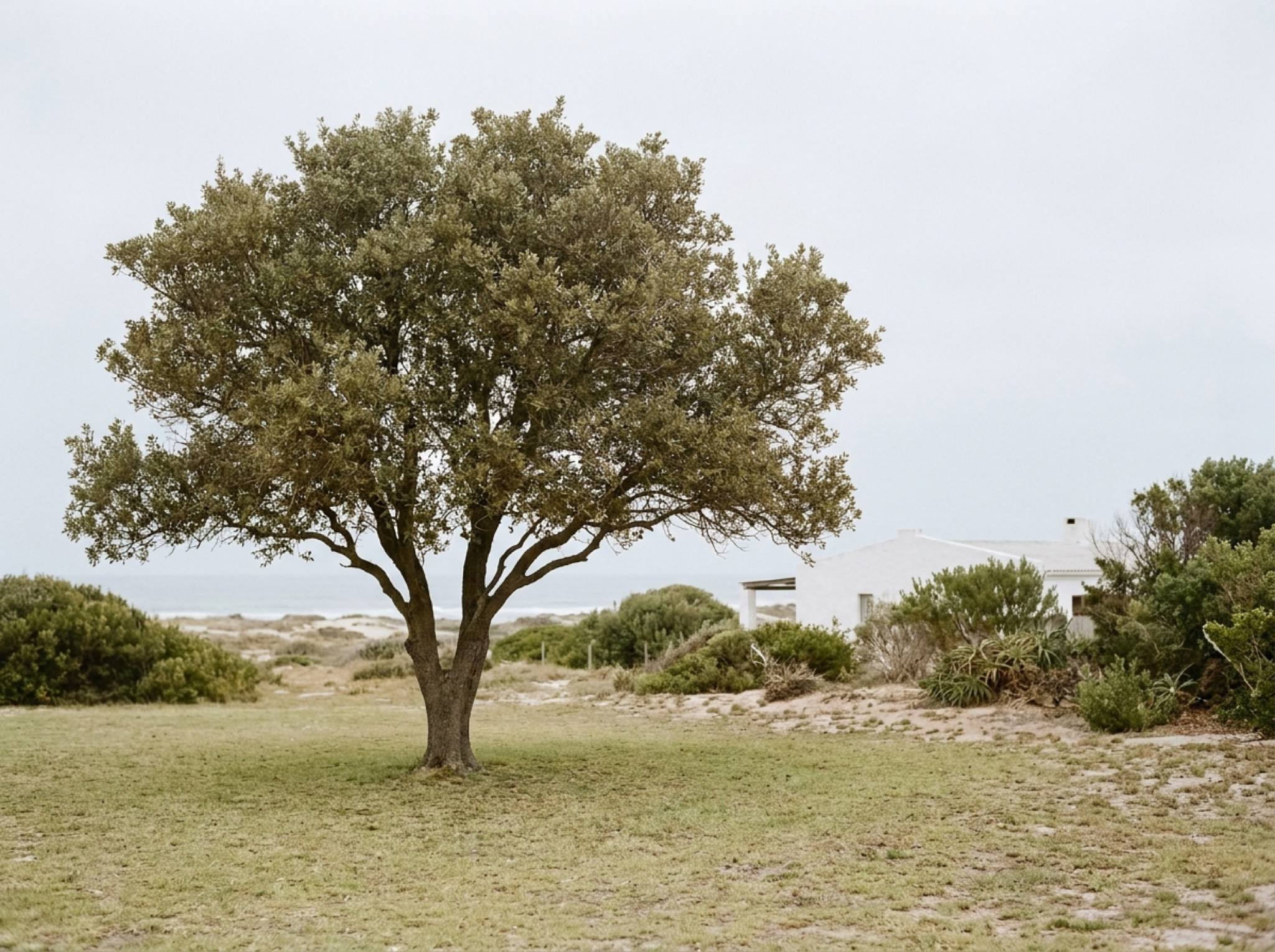
Which milkwoods are protected
DFFE publishes a list of protected trees every year. The list in the Government Gazette of 13 March 2024 names two milkwoods:
- White milkwood, Sideroxylon inerme subsp. inerme. Witmelkhout in Afrikaans, umakhwelafingqane in isiZulu.
- Coastal red milkwood, Mimusops caffra. Kusrooimelkhout in Afrikaans, umkhakhayi in isiZulu.
Both are coastal trees. SANBI says coastal red milkwood grows in dune forest from the high tide mark, makes up to 75% of the coastal and dune forest in places, and is found in abundance along the coastal roads north and south of Durban. White milkwood grows in dune forest and coastal woodland.
What you may not do
Section 15(1) of the Act says no person may cut, disturb, damage or destroy a protected tree. No one may possess, move, buy, sell or give away a protected tree, or wood from one, either. The only ways around this are a licence or a published exemption. It makes no difference whose land the tree is on.
Breaking this rule is a first category offence. The Act allows a fine, up to three years in prison, or both.
DFFE's licence form counts pruning and trimming as “disturb, damage”, and transplanting as “remove”. So those need a licence too, unless an exemption covers them.
What you may do without a licence
A 2014 notice (Government Gazette 37246) lists exemptions. These are the ones that matter in a home garden:
- Pruning in town. On private property in an established urban area, or around a homestead, you may prune up to 25% of the crown, as long as you do not mutilate the tree. This does not cover new building work, topping a tree to open a view, or trees growing in natural forest.
- Street trees. The municipality and its contractors may prune street and park trees for upkeep.
- Nursery trees. Buying, selling, moving and potting milkwoods raised in a nursery from seed or cuttings needs no licence.
- Dead wood. You may collect small amounts of dead wood for your own use.
Cutting a milkwood down, cutting away more than a quarter of its crown, or topping it for a sea view all still need a licence.
If the tree stands in a patch of natural coastal forest, a second rule applies. Section 7 of the Act protects every indigenous tree in a natural forest, listed or not, and it has its own licence.
How to apply for a licence
The form is called “Application for a licence regarding protected trees”, and you can download it from DFFE. Fill in every part: DFFE says it will not consider incomplete forms. Email or deliver it to your nearest DFFE Forestry office. The contacts are on DFFE's forestry contacts page.
The form asks for:
- A certified copy of your ID, not older than six months, and proof that you own the land (such as the title deed), or that the owner has authorised you.
- The erf number or farm name, and GPS points for the trees.
- For each tree: the species, how many, the size (height and trunk width at about chest height) and its condition.
- What you want to do (cut, prune or transplant), why, and how the work will be done.
- A map or Google Earth pin, and photos of the trees.
- Approved building plans or an environmental authorisation, if the work is part of a building project. DFFE will not consider the application until you show that other laws that apply have been met.
- Proof that you told your neighbours, or your reason for not doing so.
The form does not give a fee or a time frame. Ask the Forestry office when you send it in, and do not book the tree feller until you have the licence.
What to ask a tree feller
Before any work starts on or near a milkwood, ask:
- What species is this tree? Is it on the protected list?
- Will you work from our DFFE licence, and keep a copy on site?
- Does the job match the licence? If the licence says prune, the tree stays up.
- With no licence: will you stay under a quarter of the crown, with no topping?
- Where will the wood go? Moving or selling milkwood wood needs a licence too.
A feller who offers to take a milkwood down without a licence is asking you to break the law with them.
Milkwoods on the verge
Trees on a verge or in a public place belong to the municipality. The nuisance by-laws of Ray Nkonyeni (Port Edward, Margate, Port Shepstone) and eThekwini (Durban) both say no one but the municipality may cut down or remove such a tree without its written permission. So a milkwood on the verge needs the municipality's permission as well as a DFFE licence.
Questions
- Can I prune a milkwood without a licence?
- In an established town garden, yes: up to 25% of the crown, without mutilating the tree or topping it for a view. More than that, or pruning for new building work, needs a DFFE licence.
- Can I buy a milkwood from a nursery?
- Yes. Milkwoods raised in a nursery from seed or cuttings are exempt for buying, selling, moving and growing. Once it grows in your garden it is a protected tree, so cutting it down later needs a licence.
- The milkwood is dead. Can I take it out?
- Ask the Forestry office first. The exemptions let you collect small amounts of dead wood, but cutting down a standing tree, alive or dead, is only exempt in plantations and similar planted sites, not in town gardens.
- What is the penalty for cutting a milkwood?
- Cutting or damaging a protected tree without a licence is a first category offence under the National Forests Act. The penalty can be a fine, up to three years in prison, or both.
Sources
- Annual list of protected tree species, National Forests Act, Government Gazette 50291 (13 March 2024). Department of Forestry, Fisheries and the Environment.
- List of protected tree species and the effect of section 15(1). Department of Forestry, Fisheries and the Environment.
- Exemptions in terms of sections 7(1) and 15(1), Notice 25 of 2014, Government Gazette 37246. National Forests Act, via Acts Online.
- Application for a licence regarding protected trees (form, 2025/2026). Department of Forestry, Fisheries and the Environment.
- Forestry office contacts. Department of Forestry, Fisheries and the Environment.
- Licence regarding protected trees. Coast KZN.
- Licence regarding trees in natural forests. Coast KZN.
- Mimusops caffra (coastal red milkwood). SANBI PlantZAfrica.
- Sideroxylon inerme (white milkwood). SANBI PlantZAfrica.
- Ray Nkonyeni Municipality Nuisance By-laws, Municipal Notice 232 of 2017, section 6. Ray Nkonyeni Municipality (copy hosted by southbroom.org).
- eThekwini Municipality Nuisances and Behaviour in Public Places By-law, section 6. eThekwini Municipality (copy hosted by Coast KZN).
Last checked